New Format, Higher Stakes: Champions League Explained
The Champions League format is a single league phase of 36 teams in one table, where each team plays eight matches and its final position decides whether it reaches the Round of 16 directly, goes into a play-off, or is eliminated. That one sentence is the whole idea; everything else in this guide explains how it works in practice, round by round.
If you have watched the competition for years and still find the new table confusing on a match night, you are not alone. The change replaced a system most fans knew by heart, and the consequences of a single result are less obvious than they were in a four-team group. This page walks through the old format and the new one, what each finishing zone means, and the route from the league phase to the final on Saturday 5 June 2027 at the Estadio Metropolitano in Madrid. For the dates themselves, see our complete Champions League fixtures 2026-27 schedule.
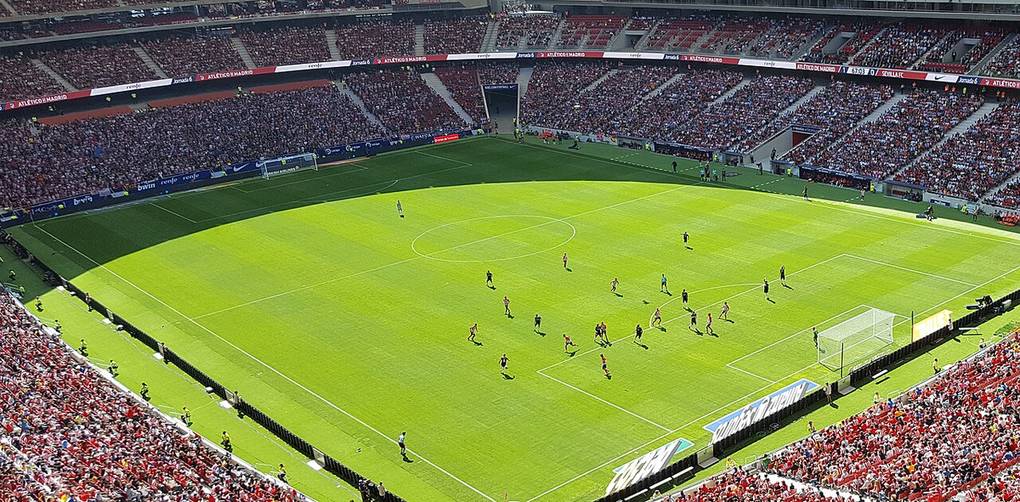
The old format and the new format
Before the change, the Champions League began with 32 teams divided into eight groups of four. Each team played the other three teams in its group home and away, the top two in each group advanced to the Round of 16, and the third-placed team dropped into the Europa League. It was simple to follow, but it also produced groups of very uneven strength, matches with nothing at stake once a group was settled, and the same familiar pairings season after season.
Since the 2024-25 season, the competition has used the current format instead: 36 teams, one single league table, and no groups at all. Every team is ranked together from 1st to 36th, even though no team plays all of the others. The group stage, the separate Europa League drop-down route and the eight mini-tables are all gone. UEFA sets out the current format and the 2026-27 dates on its official format page on UEFA.com.
How the league phase works
Each of the 36 teams plays eight league-phase matches against eight different opponents, with four matches at home and four away. In the 2026-27 season the league phase runs from 8 September 2026 to 27 January 2027, across eight matchdays. A win or a draw earns points in exactly the way you would expect in a domestic league, and all of those results feed into the one shared table.
The key difference from a normal league is that the schedule is not balanced in the way a domestic season is. Two teams sitting next to each other in the table may have faced completely different opponents, which is why the table can look unpredictable well into the winter. It also means there is no safe moment to relax: a team that starts slowly can still climb into the play-off places, and a team that starts quickly can still slip out of the top eight if it drops points in January. You can follow the matches as they happen on our fixtures today page, and find viewing options on our English home page.
What each finishing position means
When the eighth and final matchday is complete, the table is split into three zones, and each zone leads somewhere different. This is the part of the format that matters most, so it is worth learning by heart.
| Final position | What happens next |
|---|---|
| 1st to 8th | Qualify directly for the Round of 16 |
| 9th to 24th | Enter the two-legged knockout round play-offs for the remaining Round of 16 places |
| 25th to 36th | Eliminated from the competition |
Finishing in the top eight is the prize every club wants, because it removes two extra matches in February and sends a team straight into the Round of 16 in March. Finishing between 9th and 24th keeps a team alive, but at a cost: it must win a two-legged play-off tie to reach the Round of 16, adding two demanding matches to an already crowded calendar. Finishing 25th or lower ends the European season completely. There is no consolation route and no second chance in another competition.
The knockout path to the final
Once the league phase ends, the knockout rounds follow a familiar pattern of two-legged ties, home and away, until the final. The knockout round play-offs take place on 16/17 and 23/24 February 2027 and produce the eight teams who join the top eight in the Round of 16. The Round of 16 follows on 9/10 and 16/17 March 2027, the quarter-finals on 6/7 and 13/14 April 2027, and the semi-finals on 27/28 April and 4/5 May 2027. The winners of the two semi-finals meet in the one-match final on Saturday 5 June 2027 at the Estadio Metropolitano in Madrid, which our guide to the Champions League final 2027 covers in detail.
Understanding this path also explains the viewing calendar. If your team finishes in the play-off zone, your February suddenly includes two extra European nights that would not have existed under a top-eight finish. Our guides to watching in the USA and watching in the UK and France list the official broadcasters for every round, including those play-offs.
Why UEFA changed the format
The explanation UEFA gives for the change comes down to three ideas, and each one is visible in how the league phase plays out. First, the new format creates more matches between the biggest clubs earlier in the season, rather than saving almost all of those pairings for the spring. Second, it is designed so that every matchday matters: because one table covers all 36 teams, a result in one stadium can change the position of teams playing in completely different matches that same night. Third, it builds towards a single dramatic final league-phase day, when all 18 Matchday 8 matches are played on the same day, on 27 January 2027, and positions can change with every goal.
Whether the new format is better than the old one is a matter of opinion, and fans argue about it constantly. What is not in doubt is that it rewards consistency across all eight matchdays and punishes any team that treats an early fixture as unimportant. A slow start is recoverable, but only just, and that jeopardy is exactly what the format was designed to create.
Frequently asked questions
How many teams play in the Champions League?
36 teams play in the league phase, all ranked together in a single table.
How many matches does each team play in the league phase?
Each team plays eight league-phase matches, four at home and four away, against eight different opponents.
Do teams drop into the Europa League from the Champions League?
No. Teams finishing 25th to 36th in the league phase are eliminated from European competition entirely, with no drop into the Europa League.
What happens on the final league-phase day?
On Matchday 8, 27 January 2027, all 18 matches are played on the same day and the final league table, and every team's route or elimination, is decided that evening.
When is the Champions League final?
The 2026-27 final is on Saturday 5 June 2027 at the Estadio Metropolitano in Madrid.