Football Shirt Numbers by Position
Published on 29 October 2026
Football shirt numbers began as a practical way to tell players apart, and they grew into a language of their own. When a coach says "play as the 10" or a commentator calls a striker "a classic number 9", they are not talking about the shirt in the shop: they are talking about a role, a tradition, and a set of expectations built up over a century. This guide explains the traditional 1–11 numbering system, what each number means, how modern squad numbers changed the picture, and why the numbers 7, 9, and 10 carry more weight than the rest.

Where shirt numbers came from
Shirt numbers were introduced so that spectators, referees, and journalists could identify players from a distance. In the early days of numbered shirts, the starting eleven wore numbers 1 to 11, and each number matched a position on the pitch: the goalkeeper wore 1, the defenders wore 2 to 5, the midfielders wore 4 to 8 depending on the system, and the attackers wore 7 to 11. The numbering followed the old 2-3-5 formation, counting up the pitch from the goalkeeper to the left winger, and it stuck even as formations changed.
That is why the traditional system still feels logical today. The lowest numbers belong to the players closest to their own goal, and the highest numbers belong to the attackers. When you see a team sheet, the numbers still give you a rough map of the team before a ball is kicked, even though the map is no longer exact.
The traditional 1–11, position by position
The table below shows the most widely used traditional mapping in continental Western Europe, which is the version most fans and coaches mean when they talk about "the number 10" or "the number 9". Traditions differ slightly by country — in some South American systems, for example, the number 5 is a holding midfielder rather than a centre-back — but this version is the standard reference point.
| Number | Traditional position | What the player does |
| --- | --- | --- |
| 1 | Goalkeeper | Stops shots, claims crosses, organises the defence |
| 2 | Right-back | Defends the right flank, marks the opposing winger |
| 3 | Left-back | Defends the left flank, marks the opposing winger |
| 4 | Centre-back (or holding midfielder) | Defends the centre, or screens the defence |
| 5 | Centre-back | Defends the centre, wins headers, blocks shots |
| 6 | Defensive / holding midfielder | Protects the defence, starts attacks with simple passes |
| 7 | Right winger | Attacks down the right, beats defenders, crosses or cuts inside |
| 8 | Central midfielder | Links defence and attack, covers ground in both directions |
| 9 | Centre-forward / striker | Leads the line, holds the ball up, scores goals |
| 10 | Attacking midfielder / playmaker | Creates chances, unlocks defences, links midfield and attack |
| 11 | Left winger | Attacks down the left, beats defenders, crosses or cuts inside |
Two numbers in this table deserve a special note. The number 4 is the most flexible of the eleven: in some traditions it is a centre-back, in others it is the holding midfielder who sits just in front of the defence. The number 6 is the classic "pivot", the player who receives the ball from the defence and sets the tempo, and it is often described as the deepest midfielder rather than a defender.
If you are still learning the positions themselves, our football players guide explains each role in full, and our beginners guide covers the game from scratch.
The famous numbers: 7, 9, and 10
Some numbers became famous because the players who wore them became legends, and clubs now treat those shirts as honours to be earned rather than numbers to be handed out.
The number 7 is the winger's shirt with star quality. At Manchester United, it was worn by George Best, Eric Cantona, David Beckham, and Cristiano Ronaldo, and the weight of that lineage is part of why Ronaldo's return to United in 2021 felt so symbolic. A number 7 is expected to excite: to beat a defender, to produce a moment of skill, to change a match. The most famous modern example is Cristiano Ronaldo, whose career in the shirt is covered in our Cristiano Ronaldo profile. Modern number 7s often play as wide forwards rather than traditional wingers, cutting inside onto their stronger foot, but the expectation of flair remains. The number 9 is the striker's shirt, full stop. The classic number 9 is the player the whole attack is built around: strong, good in the air, clinical in the penalty area, and brave enough to want the ball when a chance comes. Ronaldo Nazário, the Brazilian striker, made the number 9 iconic at Barcelona, Inter, and Real Madrid, and the phrase "a proper number 9" is still used to describe a centre-forward who does the traditional job rather than dropping deep. A team without a number 9 is often described as playing with a "false nine", a forward who drops into midfield to create space for others. The number 10 is the playmaker's shirt, and in many football cultures it is the most revered of all. Pelé wore 10 for Brazil, Diego Maradona wore 10 for Argentina and Napoli, and Lionel Messi wore 10 for Barcelona and Argentina. The number 10 plays between the lines, receives the ball under pressure, and produces the pass or the dribble that breaks a defence open. In Argentina and Brazil, the number 10 is not just a position: it is an identity, and young players dream of wearing it.Other numbers have their own stories. The number 1 is the goalkeeper's shirt by definition, and great goalkeepers such as Gianluigi Buffon and Iker Casillas made it famous in its own right. The number 5 is associated with elegant centre-backs and deep midfielders, from Franz Beckenbauer to Sergio Busquets. The number 8 is the box-to-box midfielder's shirt, worn by players who run all day and contribute at both ends of the pitch.
Modern squad numbers: why the map no longer matches
In the 1990s, most major European leagues adopted permanent squad numbers. Instead of wearing 1 to 11 according to the team selected each week, each player kept the same number all season, and numbers could run from 1 to 99. The Premier League made squad numbers compulsory from the 1999–2000 season, and other leagues followed a similar path.
The change broke the link between shirt number and position. A goalkeeper can now wear 13, a striker can wear 7, a midfielder can wear 41, and a defender can wear 66, as Trent Alexander-Arnold famously did at Liverpool. Players choose numbers for personal reasons: a birth year, a lucky number, a tribute to an idol, or simply the number that was free when they joined. Cristiano Ronaldo's 7 at Real Madrid, Juventus, and Al Nassr is a personal brand as much as a position, and the same is true of many modern stars.
That is why coaches now distinguish between two things that used to be the same. The "shirt number" is what is printed on the back of the jersey. The "position number" is the tactical shorthand — "the 6", "the 10" — that describes a role regardless of the shirt. When a pundit says a team is "missing a number 9", they usually mean the team has no recognised striker, not that nobody owns the shirt.
Numbers by country and competition rules
Numbering traditions still vary, and a few rules are worth knowing when you watch international football. In some South American traditions, the number 5 is the holding midfielder and the number 4 is a right-back, a legacy of different early formations. In youth football, numbers are often assigned simply by squad order rather than position, so a young player wearing 10 may not be the playmaker at all.
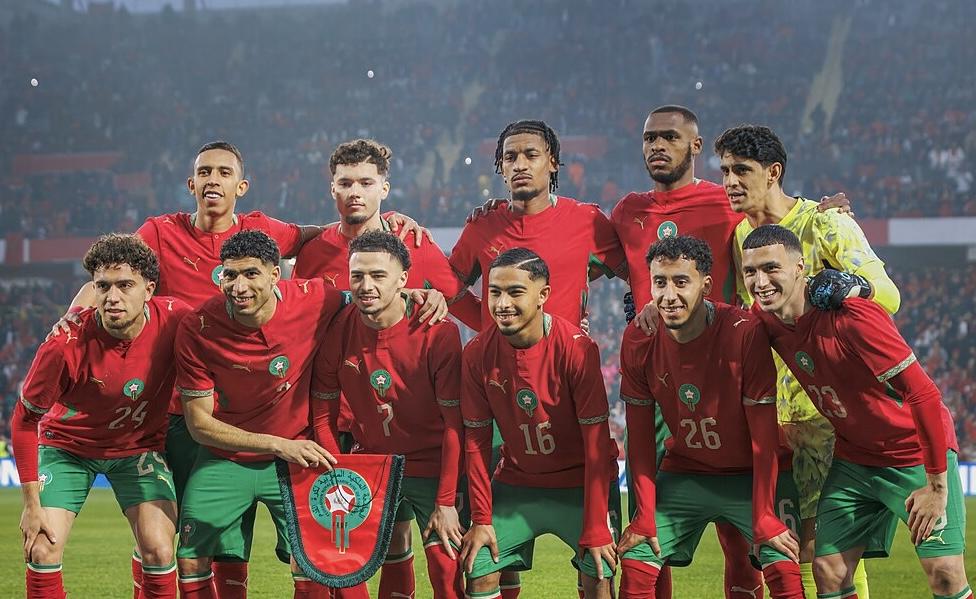
Competitions also set their own rules. Most leagues require each squad number to be unique within the team and within a set range, commonly 1 to 99, and some require goalkeepers to wear a shirt clearly different in colour from outfield players, which is why goalkeepers traditionally wear 1 but may wear any number in a distinct colour. At international tournaments, squads are numbered 1 to 26 in recent editions, with the goalkeepers usually taking 1, 12, and 23, although that convention is not a formal rule.
How to read a team sheet like a fan
When you look at a starting eleven, use the numbers as a first clue, not a final answer. A team sheet that reads 1, 2, 4, 5, 3 across the back and 6, 8, 10 in midfield with 7, 9, 11 up front is probably a traditional shape, and you can picture it immediately. A team sheet full of numbers in the 20s, 30s, and 40s tells you nothing about the shape, and you need the formation graphic or the first few minutes of play to see how the team is actually set up.
The smarter habit is to watch what a player does rather than what they wear. A number 8 who never leaves the edge of his own penalty area is playing as a holding midfielder whatever his shirt says. A number 9 who drops deep to collect the ball is playing as a false nine. The numbers are a guide to the history of the game; the movement on the pitch is the game itself.

Frequently Asked Questions
What does the number 10 mean in football?
Traditionally, the number 10 is the playmaker: the attacking midfielder who creates chances and links midfield with attack. It is associated with Pelé, Maradona, and Messi, and in many football cultures it is the most prestigious shirt a player can wear.
Why do goalkeepers wear number 1?
Because the traditional 1–11 system counted up the pitch from the goalkeeper, so the goalkeeper was number 1. Modern squad numbers mean goalkeepers can wear other numbers, but 1 remains the classic goalkeeper's shirt.
Can a striker wear number 7?
Yes. Under modern squad numbering, any outfield player can wear any available number, and many famous strikers and wide forwards wear 7. The number describes the shirt, not a rule about the position.
What is a classic number 9?
A classic number 9 is a traditional centre-forward: a striker who leads the line, holds the ball up, wins headers, and scores goals inside the penalty area. The phrase is used to distinguish that role from a "false nine", a forward who drops deep into midfield.
Why do some players wear numbers like 66 or 99?
Because permanent squad numbers allow numbers up to 99, and players often choose a number for personal reasons — a birth year, a lucky number, or the number that was available when they joined the club.
Do shirt numbers still match positions in modern football?
Not reliably. Squad numbers broke the link between number and position in the 1990s, so the traditional 1–11 map is now a tactical shorthand ("the 10", "the 9") rather than a description of what is printed on the shirt.