Football for Beginners: A Complete Guide
Published on 29 October 2026
Football is the simplest game in the world to understand and one of the hardest to master. Two teams of eleven players try to score more goals than each other in 90 minutes, and that single idea explains almost everything you will see on a screen. This guide gives you everything a complete newcomer needs: the objective, the positions, the basic rules in plain language, how a season works, and how to start following the sport without feeling lost.

The objective: score more goals than the other team
A goal is scored when the whole ball crosses the goal line between the posts and under the crossbar. It does not matter how beautiful the shot is or how far it travelled: one goal counts as one goal, whether it is a tap-in from two metres or a strike from thirty. The team with more goals when the referee blows the final whistle wins. If both teams score the same number, the match is a draw — in league games, that is simply the result, while in knockout games a winner must be found through extra time and, if needed, a penalty shootout.
That simplicity is why football travels so well: a ball and a few friends are enough to play it, and everything else — formations, transfers, television money — is built on top of that one objective.
The pitch and the players
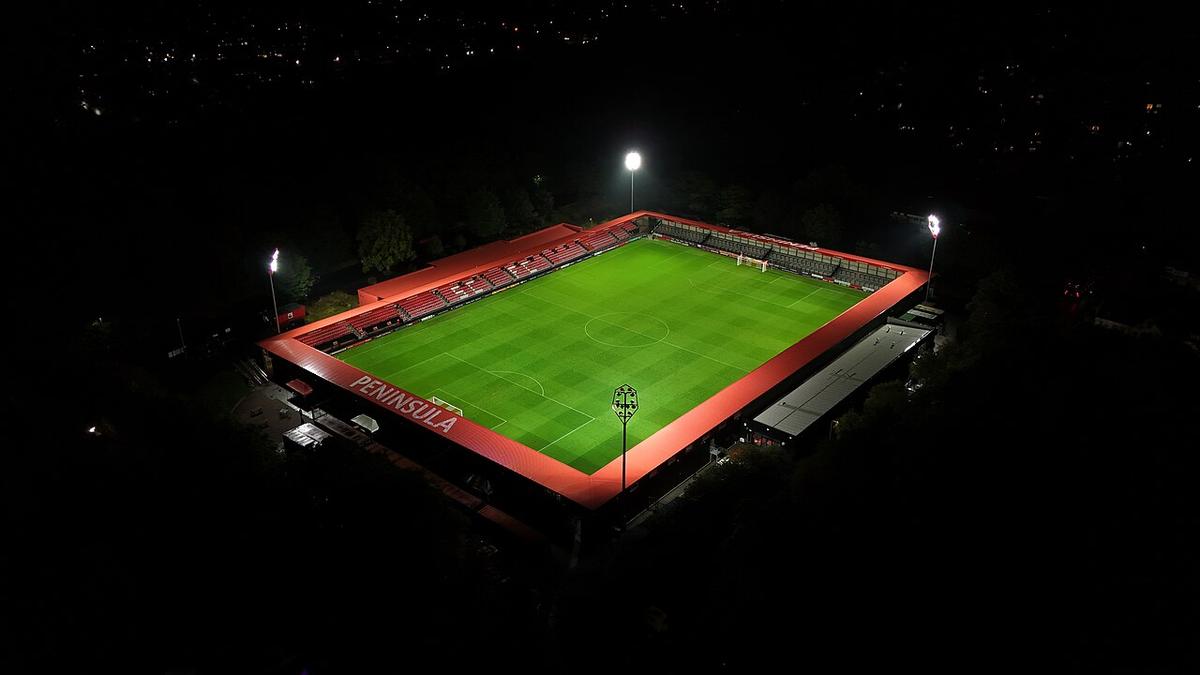
A football pitch is a rectangle with a goal at each end, a halfway line across the middle, and a penalty area in front of each goal. The penalty area matters because it is where the goalkeeper is allowed to use their hands, and where fouls by defenders are punished with a penalty kick. The centre circle marks the area opponents must stay outside at kick-off, and the corner arcs mark where corner kicks are taken.
Each team fields eleven players: one goalkeeper and ten outfield players. Teams also name substitutes on the bench, and in most top competitions they may use five substitutions during a match, with an extra one in extra time in some competitions. A player who is substituted off cannot return in most professional competitions, so managers use their changes carefully, often saving one for an injury or for fresh legs late in the game.
The four groups of positions
You do not need to memorise every tactical role to follow a match. Almost every player fits into one of four groups, and our football players guide explains the individual roles in more detail.
Goalkeepers are the only players allowed to handle the ball, and only inside their own penalty area. Their job is to stop shots, claim crosses, organise the defence in front of them, and start attacks by throwing or kicking the ball out after a save. A goalkeeper who handles the ball outside the penalty area commits a handball offence like any outfield player. Defenders play closest to their own goal. Centre-backs defend the middle, win headers, and block shots. Full-backs play on the left and right sides, marking wingers and, in the modern game, pushing forward to support attacks. If a defender makes a mistake, the opposition is usually straight through on goal, which is why defenders are judged first on reliability rather than flair. Midfielders link defence and attack. Defensive midfielders sit in front of the defence, break up opposition attacks, and pass the ball simply to a teammate. Central midfielders cover the most ground, keeping possession and moving the team up the pitch. Attacking midfielders play closer to the forwards, trying to create scoring chances with passes, movement, and shots of their own. Forwards play closest to the opposition goal. Strikers lead the line, hold the ball up, and finish chances. Wingers play wide, using pace and skill to beat a defender and cross the ball or cut inside to shoot. Forwards are judged mainly on goals and assists, but the best ones also press defenders, forcing mistakes high up the pitch.The basic rules in plain language
The Laws of the Game are written by the International Football Association Board (IFAB), and the full set runs to seventeen laws, but a newcomer only needs a handful of ideas to follow a match.
Hands. Outfield players may not deliberately handle the ball. The goalkeeper may handle it only inside their own penalty area. Accidental handball is judged on factors such as arm position and whether the arm made the body unnaturally bigger, which is why handball decisions still cause arguments even among experts. Fouls and free kicks. Tripping, pushing, holding, or kicking an opponent unfairly is a foul, and the other team gets a free kick from the spot of the offence. A foul inside the penalty area gives a penalty kick: one shot from twelve yards against only the goalkeeper. Serious fouls can also bring a yellow card (a warning) or a red card (a sending-off). Two yellow cards in one match equal a red card, and the team plays the rest of the match with ten players. Offside, simply explained. A player is offside if, when a teammate plays the ball to them, they are nearer the opposition goal line than both the ball and the second-last opponent, and they then become involved in play. Being in an offside position alone is not an offence: the player must interfere with play, interfere with an opponent, or gain an advantage from the position. You cannot be offside from a throw-in, a corner kick, or a goal kick, and you cannot be offside in your own half. The rule exists to stop attackers standing next to the goal waiting for a long pass, and it is why forwards time their runs so carefully. Out of play and restarts. When the whole ball crosses the touchline (the side line), the team that did not touch it last throws it back in with both hands from behind the head. When it crosses the goal line after last touching an attacker, the defending team takes a goal kick. When it crosses the goal line after last touching a defender, the attacking team takes a corner kick. After every goal, play restarts with a kick-off from the centre spot. Time. A standard match lasts 90 minutes: two halves of 45 minutes with a 15-minute half-time break. The referee adds stoppage time at the end of each half for injuries, substitutions, and other delays, which is why you often see "90+3" on the clock. Knockout matches level after 90 minutes usually play 30 minutes of extra time, and if they are still level, a penalty shootout decides the winner. Our football scores guide explains how to read scorelines, extra time, and shootouts.How a season and a league work
Most club football is organised into leagues. In a league, every team plays every other team, usually once at home and once away, across a season that typically runs from August to May in Europe and across the calendar year in some other countries. Teams earn three points for a win, one for a draw, and none for a defeat, and the league table ranks them by points. When teams finish level on points, a tiebreaker such as goal difference (goals scored minus goals conceded) decides the order, although some leagues use head-to-head records first.
At the end of the season, the team top of the table wins the league title. In most European leagues, the bottom teams are relegated to the division below, while the top teams from that division are promoted to replace them. This promotion and relegation system means every match matters: teams at the top chase the title or a place in continental competition, teams in the middle chase prize money and pride, and teams at the bottom fight to stay in the division.
Alongside leagues, teams play cup competitions, which are usually knockout tournaments: lose once and you are out. The most famous continental club competition is the UEFA Champions League, in which the top teams from Europe's leagues compete, and the equivalent tournaments exist in South America (the Copa Libertadores), Africa, Asia, and North America. International football works the same way at national-team level, with the FIFA World Cup — the most-watched sporting event on earth — held every four years. The most recent edition, played in June and July 2026 in the United States, Canada, and Mexico, was won by Spain, who beat Argentina 1-0 in the final.
How to start following football
Pick one team and one league to start with, rather than trying to follow everything at once. Watch that team's matches for a month, learn the names of its starting eleven, and the rest of the sport will start to make sense around them. A local team, a team a friend supports, or a team whose style you enjoy are all good reasons to choose: there is no wrong answer, and most supporters inherit their team rather than choosing it logically.
Learn the rhythm of the week. Most leagues play at weekends, continental competitions usually take place on Tuesday and Wednesday evenings, and transfer windows — when clubs may buy and sell players — open in the summer and again in January.
Finally, use reliable sources. The competition's own website, the clubs' official channels, and established broadcasters are the safest places for fixtures, kick-off times, and results. For today's fixtures and kick-off times, see our today's matches page, and for finished games, our results page. If you need to know where a match is televised, our where-to-watch guides list the official broadcaster for each competition, so you can watch legally rather than hunting for unofficial streams.

Frequently Asked Questions
How long does a football match last?
A standard match lasts 90 minutes, split into two halves of 45 minutes with a 15-minute half-time break, plus stoppage time added by the referee at the end of each half. Knockout matches that are level after 90 minutes usually go to 30 minutes of extra time and then a penalty shootout.
What is offside in simple terms?
A player is offside if they are nearer the opposition goal than both the ball and the second-last opponent when a teammate plays the ball to them, and they then become involved in play. Simply standing in an offside position is not an offence, and you cannot be offside from a throw-in, corner kick, or goal kick.
Why does the goalkeeper wear a different colour shirt?
So that the referee, the other players, and the spectators can instantly tell the goalkeeper apart from outfield players. It matters because the goalkeeper is the only player allowed to handle the ball, and only inside their own penalty area.
How many players are on a football team?
Eleven players start a match: one goalkeeper and ten outfield players. Teams also name substitutes, and most top competitions allow five substitutions per match.
What happens if a match ends in a draw?
In a league match, a draw is the final result and each team earns one point. In a knockout match, where a winner is required, the teams usually play extra time and then a penalty shootout if they are still level.
How do I choose a team to support?
Pick a team you have a connection with — a local club, a team a friend or family member supports, or a team whose football you enjoy watching — and follow them for a month. Learning one team's players and fixtures first makes the whole sport much easier to follow.