Women's World Cup 2027 Guide
This guide brings together only facts confirmed by FIFA — dates, venues, format, qualified teams and official broadcasters — and states just as clearly what is not yet confirmed, so you are not guided by rumours.
There is no men's World Cup in 2027: the 2026 edition is already over and the next men's tournament comes in 2030. The marquee FIFA tournament of 2027 is this one, the women's edition. Our Spanish flagship guide covers the same tournament for Spanish-speaking readers: Mundial Femenino 2027: guía completa.

Datos clave
| Fact | Detail |
|---|---|
| Tournament | FIFA Women's World Cup Brazil 2027, 10th edition |
| Dates | 24 June to 25 July 2027 |
| Host | Brazil, eight cities and eight stadiums |
| Teams | 32 teams, 64 matches |
| Opening match | 24 June 2027, Brazil at the Maracanã in Rio de Janeiro |
| Final | 25 July 2027, at the Maracanã in Rio de Janeiro |
| Defending champions | Spain, winners in 2023 |
| Still to come | Final draw date not yet announced by FIFA; tickets not yet on sale |
What the 2027 Women's World Cup is
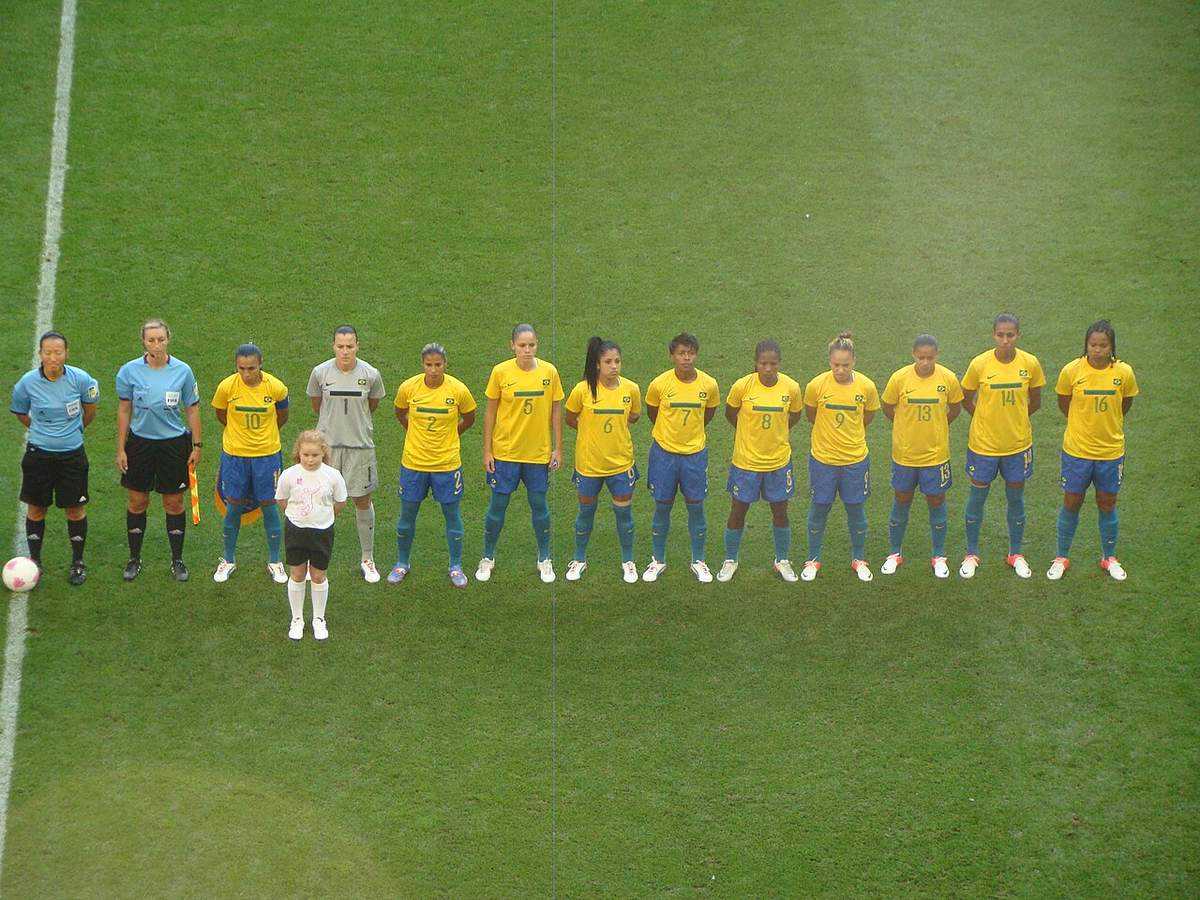
The Women's World Cup is the biggest national-team tournament in women's football, played every four years. The 2027 edition will be the 10th in history and the first staged in South America — a continent that has never won the title. Hosts Brazil came closest with the 2007 final, still their best result.
The United States lead the all-time honours with four titles, followed by Germany with two. Spain arrive as defending champions after winning their first title in 2023, beating England in the final in Australia and New Zealand. That 2023 edition was the first with 32 teams; 2027 will be the second and last at that size, because the 2031 edition expands to 48 teams.
Brazil is a proven host: all eight stadiums chosen already staged matches at the 2014 men's World Cup, and the Maracanã in Rio de Janeiro, which hosts both the opening match and the final, is one of world football's most famous venues. FIFA published the full 64-match schedule on 20 August 2026 at its Zurich headquarters, during the draw for the preliminary phase of the play-off tournament.
Confirmed dates and schedule
The round-by-round calendar published by FIFA is:
| Round | Dates |
|---|---|
| Group stage | 24 June to 8 July 2027 |
| Round of 16 | 10 to 13 July 2027 |
| Quarter-finals | 16 and 17 July 2027 |
| Semi-finals | 20 and 21 July 2027 |
| Bronze final (third place) | 24 July 2027, in São Paulo |
| Final | 25 July 2027, in Rio de Janeiro |
Hosts Brazil were seeded into Group A and will play their three group matches in three different cities: the opener on 24 June at the Maracanã in Rio de Janeiro, the second on 29 June at Arena Itaquera in São Paulo, and the third on 4 July at the Estádio Nacional in Brasília. Their opponents will be known after the final draw.
Two things are not yet confirmed and should not be treated as settled: the date of the final draw, which FIFA has not announced (reporting points to late 2026), and the kick-off times, which have not been published either. Once FIFA releases the final schedule with team names, this guide will be updated.

Host cities and stadiums
Eight cities will host the tournament, and each will stage at least seven matches, including at least one knockout tie:
| City | Stadium |
|---|---|
| Belo Horizonte | Estádio Governador Magalhães Pinto (Mineirão) |
| Brasília | Estádio Nacional Mané Garrincha |
| Fortaleza | Arena Castelão |
| Porto Alegre | Estádio Beira-Rio |
| Recife | Arena de Pernambuco |
| Rio de Janeiro | Estádio Jornalista Mário Filho (Maracanã) |
| Salvador | Arena Fonte Nova |
| São Paulo | Arena Corinthians (Arena Itaquera) |
The knockout allocation is also confirmed: Brasília, Porto Alegre, Recife and Salvador host matches through the round of 16; Belo Horizonte and Fortaleza join Rio de Janeiro and São Paulo for the quarter-finals; the semi-finals go to São Paulo (20 July) and Rio de Janeiro (21 July); the bronze final is in São Paulo on 24 July and the final at the Maracanã on 25 July.

Format
The format is the one introduced in 2023: the 32 teams are split into eight groups of four, and the top two from each group reach the round of 16. From there it is single-elimination football — round of 16, quarter-finals, semi-finals and final — plus a bronze final between the two losing semi-finalists. That makes 48 group matches and 16 knockout matches.
The places are divided as follows: Europe (UEFA) 11, Asia (AFC) 6, Africa (CAF) 4, North America, Central America and the Caribbean (Concacaf) 4, South America (CONMEBOL) 3 — including hosts Brazil — Oceania (OFC) 1, and 3 more from the intercontinental play-off tournament. The total is exactly 32.
Qualified teams: 18 of 32
As of 31 October 2026, 18 teams have booked their place and 14 spots remain. The qualified teams, by confederation, are:
- Hosts: Brazil.
- Europe (4 of 11): Denmark, France, Germany and Spain, the four League A group winners in European qualifying.
- Asia (6 of 6): Australia, China PR, Japan, Korea DPR, Korea Republic and Philippines, qualified through the 2026 Women's Asian Cup.
- Africa (4 of 4): Algeria, Cameroon, Malawi and Morocco, the four semi-finalists of the 2026 Women's Africa Cup of Nations.
- South America (2 of 3): Argentina and Colombia, the top two finishers in the CONMEBOL Women's Nations League behind Brazil.
- Oceania (1 of 1): New Zealand.
Asia, Africa, South America and Oceania have completed their direct places. The remaining 14 will come from Europe (7 places in the UEFA play-offs), Concacaf (4 places at the W Championship, 24 November to 5 December 2026) and the intercontinental play-off tournament (3 places, with a preliminary phase in November and December 2026 and a final phase in February 2027). The full confederation-by-confederation tracker is our Spanish-language qualification guide: Mundial Femenino 2027: clasificados.
How to watch: confirmed broadcasters only
FIFA has already announced broadcast rights in several major territories, and this guide lists only deals confirmed by FIFA or the rights holders:
| Territory | Confirmed coverage |
|---|---|
| Brazil | Globo: 56 matches free-to-air on TV Globo and all 64 on SporTV (pay TV). CazéTV: all 64 matches free on digital platforms. |
| United States and Puerto Rico | Netflix: every match live, with English- and Spanish-language broadcasts, plus documentary series in the build-up. |
| Spain and 17 other European territories | European Broadcasting Union (EBU): free-to-air coverage, with at least one match live per day. |
| France | M6. United Kingdom: BBC and ITV. Sweden: TV4 and SVT. |
| Germany | Magenta TV: every match, with 30 games sublicensed to a free-to-air channel. |
| Australia | Network 10 and Paramount+. |
| India | Zee (Unite8 Sports channels) and ZEE5. |
For Spanish-speaking Latin America, no rights holder has yet been publicly confirmed for 2027. We do not publish guessed channels: as soon as FIFA or an operator announces one, it will be added here and in our Spanish where-to-watch guide. The same applies to any territory missing from the table — absence means not confirmed, not that there will be no coverage.
Tickets: not yet on sale
Tickets for the 2027 Women's World Cup are not yet on sale, and FIFA has not announced sale dates or prices. The official route to avoid missing the opening is to register interest on the tournament page at FIFA.com, where FIFA will announce the sale phases. Be wary of any seller offering specific tickets for specific matches today: with no draw held, no match-ups exist to sell.
Another FIFA tournament in 2027: the U-20 World Cup
The Women's World Cup is not the only FIFA tournament confirmed for 2027. The men's U-20 World Cup will be played from 17 September to 9 October 2027 in Azerbaijan and Uzbekistan, with 24 teams. It will be the 25th edition of the tournament and will mark the 50th anniversary of the competition, founded in 1977. The FIFA Council awarded the joint hosting rights on 2 October 2025 in Zurich, and the Bureau of the FIFA Council approved the dates on 22 October 2026. It will be the first FIFA youth tournament co-hosted by countries from two different confederations (UEFA and AFC), with six venues — three per country — yet to be announced. Azerbaijan will make their tournament debut as hosts and Uzbekistan will appear for a seventh time; the defending champions are Morocco, winners of the 2025 edition in Chile.
Still to be confirmed
For clarity, here is what FIFA had not settled as of 31 October 2026:
- The date of the final draw.
- Kick-off times for the 64 matches.
- The remaining 14 teams (7 European, 4 from Concacaf, 3 from the intercontinental play-offs).
- Rights holders in Latin America and in territories without an announced deal.
- Ticket sale dates and prices.
- The specific venues for the 2027 U-20 World Cup.
Frequently Asked Questions
When is the 2027 Women's World Cup?
From 24 June to 25 July 2027, in Brazil. Hosts Brazil play the opening match at the Maracanã in Rio de Janeiro on 24 June, and the final is at the same stadium on 25 July.
How many teams play at the 2027 Women's World Cup?
32 teams, in eight groups of four. The top two from each group reach the round of 16. It will be the second edition with 32 teams and the last before the expansion to 48 in 2031.
Which teams have qualified for the 2027 Women's World Cup?
As of 31 October 2026, 18 of 32: hosts Brazil; Spain, France, Germany and Denmark from Europe; Australia, China PR, Japan, Korea DPR, Korea Republic and Philippines from Asia; Algeria, Cameroon, Malawi and Morocco from Africa; Argentina and Colombia from South America; and New Zealand from Oceania.
Where can I watch the 2027 Women's World Cup in the United States?
Netflix holds the exclusive United States rights (including Puerto Rico) for 2027: every match live, with English- and Spanish-language broadcasts. In the United Kingdom the confirmed broadcasters are BBC and ITV; in Spain, free-to-air coverage comes through the EBU members.
Is there a men's World Cup in 2027?
No. The men's World Cup in 2026 is already over and the next one comes in 2030. The marquee FIFA tournament of 2027 is the Women's World Cup in Brazil, alongside the men's U-20 World Cup in Azerbaijan and Uzbekistan.
Dates, venues and format in this guide come from the official schedule published by FIFA and FIFA announcements on the host cities, coverage in Brazil, coverage in Europe, the Netflix deal in the United States and the format and qualified teams.