How Football Rankings Really Work
Published on 29 October 2026

Football rankings are far more than a weekly talking point. They decide which pot your national team lands in at a World Cup draw, which clubs are seeded in a Champions League draw, and how many European places each league earns. This guide explains how football rankings actually work, how the points are calculated, and what the numbers can and cannot tell you, so you can read any ranking table like an expert.
What a football ranking actually measures
A ranking is a list that orders teams by a points score. The score is not a prize for popularity or history: it is built match by match from results. Win games, especially important games against strong opponents, and the score rises. Lose, and it falls, although the size of the movement depends on the system. Two rankings dominate world football, and they work in very different ways. The FIFA ranking orders men's and women's national teams. The UEFA coefficient system orders European clubs and national associations. League tables, which rank clubs inside one domestic competition, are a separate thing: they simply count points earned in that league, three for a win and one for a draw. If you are still learning how results turn into tables, our football scores explained guide covers scorelines, aggregate scores and tiebreakers.
The key idea behind both major ranking systems is the same: not all wins are equal. Beating the world number one in a World Cup knockout match should be worth far more than beating a low-ranked team in a friendly, and both systems are built to reflect that. Where they differ is in the maths they use to do it.
The FIFA ranking: an Elo system since 2018
FIFA introduced its current men's ranking system after the 2018 World Cup, replacing an older method based on averages over a fixed period. The new method borrows the Elo rating system used in chess. Every team carries a points total, and after each recognised international match, points move from one team to the other according to a formula: new points equal old points plus importance multiplied by the difference between the actual result and the expected result.
The importance coefficient, labelled I, depends only on the type of match. Friendlies outside FIFA's international windows are worth 5, friendlies inside the windows are worth 10, Nations League group games are worth 15, and Nations League play-offs and finals, continental qualifiers and World Cup qualifiers are worth 25. Continental finals before the quarter-finals are worth 35, their quarter-finals onwards are worth 40, World Cup finals before the quarter-finals are worth 50, and World Cup quarter-finals onwards are worth 60. That is why a World Cup final can move a team far more than a friendly ever could.
The actual result, labelled W, is 1 for a win, 0.5 for a draw and 0 for a loss, with special values for penalty shootouts: the shootout winner gets 0.75 and the loser gets 0.5, because a shootout is closer to a draw than to a win in normal play. The expected result, labelled We, is calculated from the gap between the two teams' points before the match. A heavy favourite is expected to win, so its expected result is close to 1, and beating a much weaker team gains almost nothing. An underdog that wins beats its expectation by a large margin and gains a lot.
FIFA publishes a worked example that makes this concrete. A team on 1,300 points meets a team on 1,500 points in a qualifier, which carries an importance of 25. The lower-ranked team wins, gains 17 points and moves to 1,317, while its opponent loses exactly the same 17 points and drops to 1,483. In most cases the system is zero-sum: what one team gains, the other loses. There are two important exceptions. Teams do not lose points for defeats in the knockout rounds of final tournaments, so a team that reaches a World Cup semi-final and loses is not punished for losing at that stage. And since April 2021, points are rounded to two decimal places rather than whole numbers.

The current FIFA top 10, dated 7 October 2026
Rankings move only when matches are played, and FIFA publishes them on set dates. The most recent edition before this article was published is dated 7 October 2026, with the next update scheduled for 18 November 2026. The top 10 in that edition is:
| Rank | Team | Points |
| --- | --- | --- |
| 1 | Spain | 2011.57 |
| 2 | Argentina | 1972.80 |
| 3 | France | 1958.86 |
| 4 | England | 1925.59 |
| 5 | Portugal | 1807.69 |
| 6 | Brazil | 1806.51 |
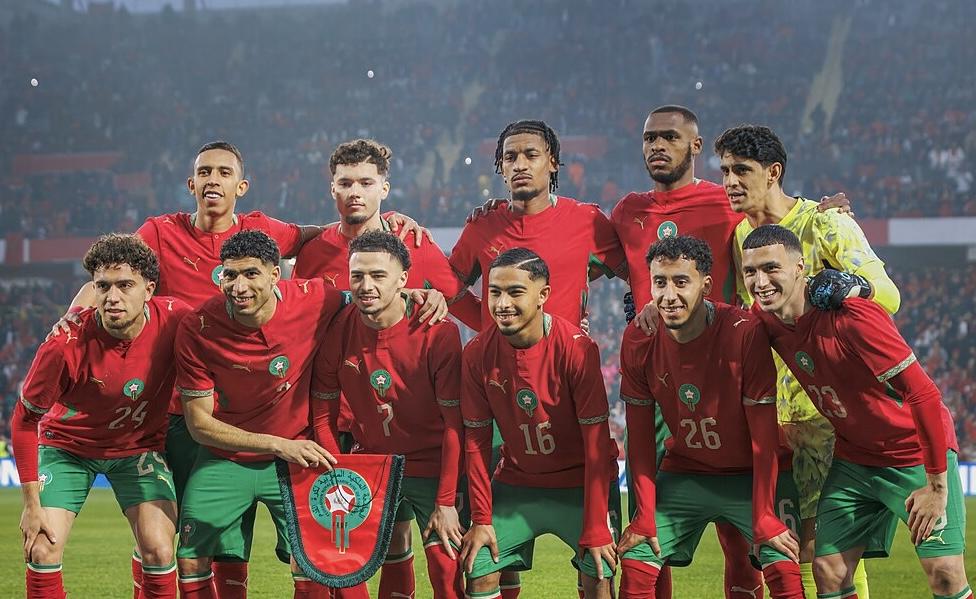
| 7 | Morocco | 1805.34 |
| 8 | Belgium | 1779.17 |
| 9 | Netherlands | 1778.61 |
| 10 | Mexico | 1738.48 |
Spain lead the ranking, and only eight nations have ever held the top spot: Argentina, Belgium, Brazil, France, Germany, Italy, the Netherlands and Spain, with Brazil spending the longest time at number one. The gap between first and tenth is large, but the gaps from fifth to seventh are tiny, which is why one round of qualifiers can shuffle the middle of the top 10 while the summit barely moves. Treat any top 10 you see without a date with suspicion: a ranking is only meaningful on the date it was published.
What rankings decide
Rankings matter because draws use them. For World Cup draws, FIFA has historically used its ranking to place teams into pots, so that the strongest teams are spread across the groups rather than drawn against each other early. A few ranking places can therefore be the difference between a manageable group and a group of death, which is why national teams take even friendly results seriously in the months before a draw. Rankings also feed qualification paths: in some confederations, higher-ranked teams enter continental competitions at later rounds or receive byes, while lower-ranked teams start earlier.
The women's game has its own FIFA ranking, calculated on a similar Elo basis, and it carries the same practical weight for the Women's World Cup draw and Olympic qualification paths. When you read that a women's team has climbed into the top five, the same logic applies: results against strong opponents in important tournaments moved the number.
UEFA club coefficients: five seasons of proof
Club football in Europe runs on a different system. A club's UEFA coefficient is the total of the points it earned in UEFA competitions over the last five seasons, or 20 percent of its national association's five-season coefficient, whichever is higher. The floor matters: a club from a strong league that has not played in Europe recently still gets a respectable coefficient from its association's record, which stops the system from being completely closed to newcomers.
Points are earned in the Champions League, Europa League and Conference League. In the league phase onwards, a win is worth two points and a draw is worth one, with bonus points for reaching later rounds and for league-phase finishes. Qualifying-round points are halved in the association calculation. Because the coefficient covers five seasons, one great campaign helps but does not transform a club overnight, while one bad season does not destroy a strong record either. Consistency is rewarded over flashes in the pan.
The coefficient decides seeding. In UEFA draws, clubs are placed into pots by coefficient, so the strongest clubs are kept apart in the early rounds. It also decides, through the separate association coefficient, how many clubs each league sends into each competition. The association coefficient adds up the points earned by all of a country's clubs in a season, divided by the number of clubs that country had in Europe, and totals that over five seasons. That is the table that decides whether a league earns an extra Champions League place. You can follow the official club ranking on UEFA's club coefficient page.
Why rankings sometimes look wrong
Rankings attract complaints, and most of them come from the same misunderstandings. First, rankings have no memory decay in the FIFA system: points only change when matches are played, so a team that stops playing keeps its score, and a team with a great past can sit high until results push it down. Second, rankings reward results, not performances. A team that dominates and loses on penalties is recorded as a draw-like result, while a team that wins ugly gets full credit. Third, rankings cannot see context they were not designed for: injuries, a weakened team in a friendly, or a side already qualified and resting players all count the same as any other result.
None of that makes rankings useless. It makes them a specific tool: a fair, transparent way to order teams by results so that draws can be seeded and places can be allocated without arguments. They are a starting point for debate, not the final word on who is best. The best team in the world on any given day is decided on the pitch, and the ranking is simply the record of what happened when it mattered.
How to read a ranking like an expert
Start with the date, then look at movement rather than position alone. A team that climbed five places after a qualifying campaign has momentum; a team drifting down a place each edition is sliding even if it still sits in the top 10. Check what kind of matches produced the movement: a rise built on World Cup knockouts is worth more than one built on friendlies. Finally, compare like with like. A national-team ranking and a club coefficient measure different things over different timescales, and a league table measures something else entirely. Keep those three apart, and football's numbers stop being confusing and start being useful. For more on the teams behind the numbers, see our football clubs guide and our football players guide.

Frequently Asked Questions
How is the FIFA ranking calculated?
Since August 2018 it uses an Elo-based formula: new points equal old points plus importance multiplied by the actual result minus the expected result. Important matches and wins over strong opponents move a team the most.
Why does a friendly barely change the ranking?
Friendlies carry the lowest importance coefficients, 5 outside international windows and 10 inside them, while World Cup knockout matches carry 60. The same result is therefore worth up to twelve times more at a World Cup than in a friendly.
What is a UEFA club coefficient?
It is a club's total points from UEFA competitions over the last five seasons, or 20 percent of its association's five-season coefficient, whichever is higher. It decides seeding in UEFA draws.
Why do two teams with similar records sit far apart in the ranking?
Because the ranking weighs who they beat and in which competition. Wins over highly ranked opponents in major tournaments move a team far more than wins over weaker opponents in friendlies.
Does the FIFA ranking decide World Cup groups?
It heavily influences them: FIFA has historically used the ranking to seed teams into pots for the World Cup draw, spreading the strongest teams across the groups.
How often is the FIFA ranking updated?
FIFA publishes the ranking on set dates during the year, not after every match. The edition current when this article was published is dated 7 October 2026, with the next update scheduled for 18 November 2026.